


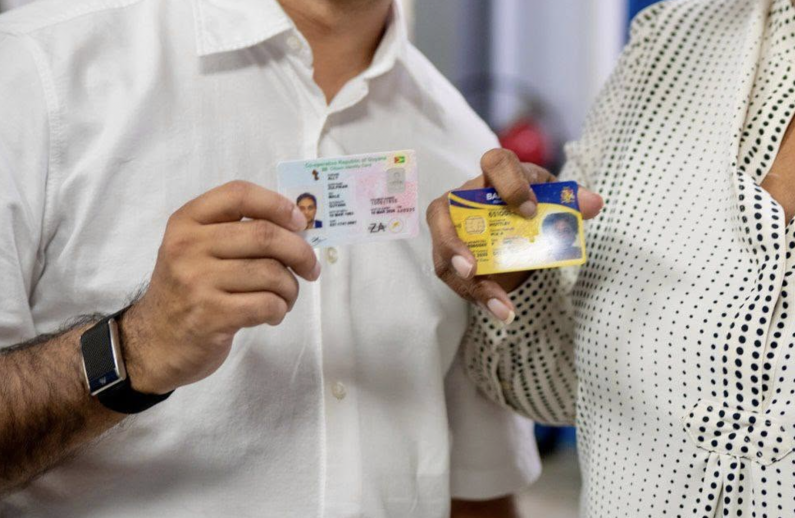
In a landmark step toward deeper Caribbean integration, Guyana and Barbados have officially launched a passport-free travel system that allows eligible citizens to travel between the two countries using only their national electronic identification (e-ID) cards. The initiative, which took effect on July 1, 2026, makes the two CARICOM nations the first in the region to implement such an arrangement.
The system was formally launched at Eugene F. Correia International Airport, where officials demonstrated the new process by completing an international journey without using passports. Instead, travelers used their ICAO-compliant national e-ID cards for airline check-in, immigration clearance, and boarding.
- Advertisement -
The initiative was championed by Mohamed Irfaan Ali and Mia Amor Mottley as part of a broader effort to strengthen regional cooperation, modernize public services, and make travel easier for Caribbean citizens. Officials say the new system is expected to boost tourism, business travel, trade, investment, and family connections while reducing the cost and inconvenience of regional travel.
Guyana’s Minister of Public Service, Government Efficiency and Implementation, Zulfikar Ally, described the launch as a historic achievement and said the long-term vision is to expand the use of e-ID cards for travel throughout the Caribbean.
“We are not going to stop here. This card will also be used for travel throughout the Caribbean,” Ally said.
The agreement follows weeks of technical preparations involving immigration authorities, airlines, the Caribbean Community Secretariat, the CARICOM Implementation Agency for Crime and Security, and other regional stakeholders to ensure border systems were ready for the transition.
Regional organizations have praised the initiative as a major milestone toward creating a more connected Caribbean. Many see it as a practical example of regional integration that could serve as a model for other CARICOM member states as the region moves toward greater digital identity interoperability and easier cross-border movement.


