


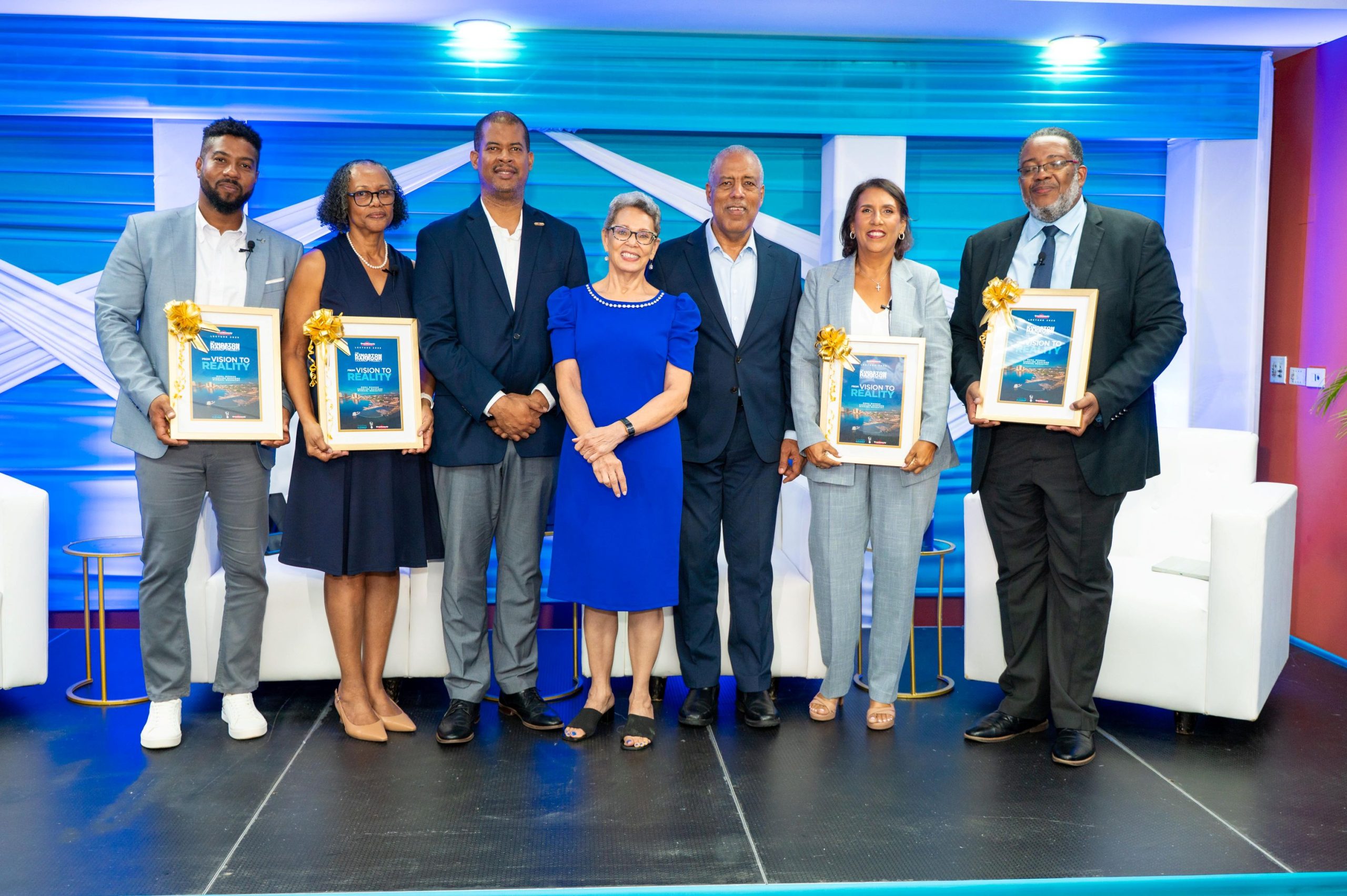
Four years after its launch and with nearly six million kilogrammes of waste prevented from entering Kingston Harbour, the Kingston Harbour Cleanup Project (KHCP) is delivering measurable results and demonstrating the power of partnership in addressing one of Jamaica’s most pressing environmental challenges – solid waste pollution in the marine environment.
These achievements were highlighted at this year’s GraceKennedy Foundation (GKF) 36th Annual Public Lecture, held at The University of the West Indies (UWI) Regional Headquarters on June 5.
- Advertisement -
Implemented through a partnership between GKF, Clean Harbours Jamaica Limited and The Ocean Cleanup, KHCP has combined innovative waste interception technology, scientific research and community engagement to become one of Jamaica’s most significant environmental conservation initiatives.
Against this backdrop, the GKF lecture, titled The Kingston Harbour Cleanup Project: From Vision to Reality, brought together key stakeholders to reflect on the project’s impact. Presentations were delivered by Caroline Mahfood, CEO of GKF; Michael McCarthy, Managing Director of Clean Harbours Jamaica Limited; and Professor Mona Webber, CD, Head of the Department of Life Sciences at UWI Mona and the GraceKennedy Foundation’s James S.Moss-Solomon Senior Chair in the Environment. The discussion was moderated by Professor Michael Taylor, Dean of the Faculty of Science and Technology at UWI Mona.
The lecture also featured a special video message from Boyan Slat, Founder and CEO of The Ocean Cleanup, who highlighted Jamaica’s contribution to their global efforts to reduce solid waste pollution in rivers and oceans.
In her presentation, From Pipe Dream to Partnership, Mahfood reflected on GKF’s role in convening stakeholders around a shared commitment to reducing pollution in Kingston Harbour and restoring one of Jamaica’s most important natural assets.
“This project demonstrates what can be achieved when organisations and communities work together around a common goal. Sustaining and expanding this progress will require continued national commitment,” said Mahfood.
In turn, Michael McCarthy outlined the expansion of the project’s scope since its launch and how Interceptor technology had been effectively deployed to prevent solid waste from entering the Harbour.
“From household appliances to motor vehicles, we have removed a wide range of waste from Kingston’s gullies,” said McCarthy. “The scale and complexity of the challenge has required practical, locally developed solutions to prevent waste from reaching the Harbour.”
The lecture also explored the Harbour’s long-term environmental outlook. Professor Webber shared ongoing research aimed at assessing whether reduced waste inflows associated with KHCP have been contributing to environmental recovery.
“Kingston Harbour has experienced significant environmental decline over many decades,” said Professor Webber. “The KHCP has played an important role in protecting vulnerable ecosystems and generating valuable environmental data. We are now undertaking the scientific assessments needed to better understand the Harbour’s recovery trajectory.”
The full lecture, including insights from KHCP project partners and environmental experts, is available on GraceKennedy’s YouTube channel. A companion publication chronicling the Kingston Harbour Cleanup Project to date will also be released at gracekennedy.com/public-lecture-series in the coming weeks.
The GraceKennedy Foundation is the philanthropic arm of GraceKennedy Limited, one of the Caribbean’s largest and most diversified conglomerates. Established in 1982, the Foundation has championed education, healthy lifestyles, and environmental stewardship across Jamaica for over four decades. The Kingston Harbour Cleanup Project is among its most significant long-term environmental initiatives, reflecting the Foundation’s commitment to the sustainable development of Jamaica.


